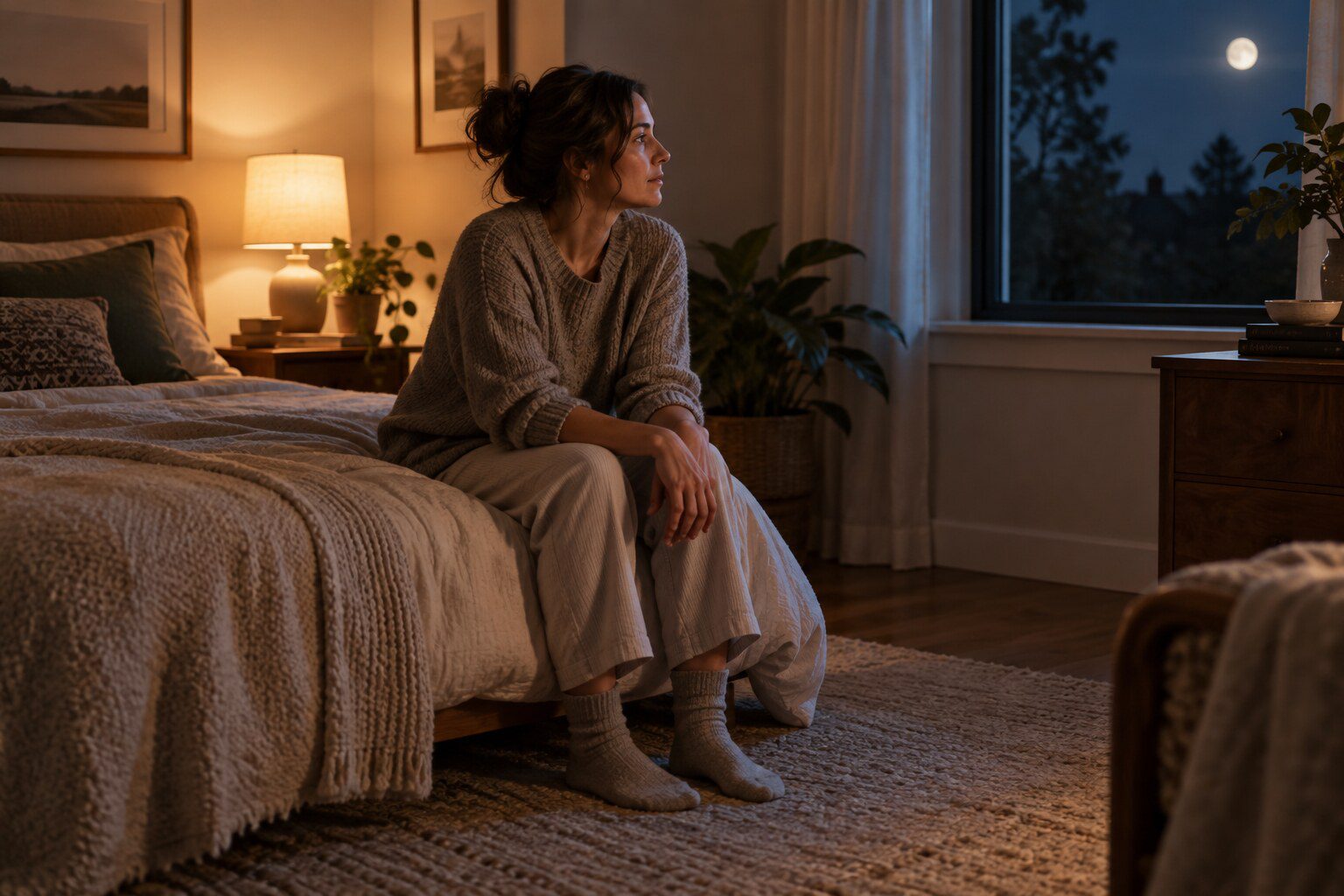
Seasonal Depression: 8 Honest Ways to Get Through the Dark Months
What seasonal depression is, the signs to watch for as the days get shorter, and eight honest, practical ways to look after your mood through autumn and winter.

Every year around this time, the evenings start closing in, and for some people their mood goes with them. If you tend to feel flatter, sleepier, and more withdrawn as autumn turns into winter, you might be dealing with seasonal depression. It’s real, it’s common, and it’s not a sign that you’re weak or lazy.
The clinical name is seasonal affective disorder, or SAD. The National Institute of Mental Health describes it as a type of depression that comes and goes with the seasons, most often starting in late autumn or early winter and lifting in spring.
Here’s what it looks like, and eight honest things that can help you get through the darker months.
Table of Contents
Signs of Seasonal Depression
Seasonal depression looks a lot like other depression, it just follows a pattern. Common signs include:
- Feeling low, hopeless, or flat most of the day.
- Losing interest in things you normally enjoy.
- Sleeping much more than usual and still feeling tired.
- Craving carbs and gaining weight.
- Pulling away from friends, sometimes called “hibernating.”
- Struggling to concentrate.
Plenty of people get a milder version, often called the winter blues. If your symptoms are affecting work, relationships, or daily life, it’s worth talking to a doctor.
1. Get Morning Daylight
Light is the big one. Shorter days mean less light hitting your eyes, and that seems to throw off your body clock and mood. Getting outside in the first hour or two after waking, even on a cloudy day, gives you far more light than indoor bulbs.
A 20 to 30 minute walk is ideal, but even standing outside with your coffee helps.
2. Ask About a Light Therapy Box
Light therapy is one of the main treatments for seasonal depression. It usually involves sitting near a bright light box (often 10,000 lux) for around 20 to 30 minutes each morning. Many people notice a difference within a couple of weeks.
Please check with a doctor before starting, especially if you have bipolar disorder, an eye condition, or take medication that makes you sensitive to light.
3. Keep a Steady Sleep Schedule
When it’s dark at 5pm, it’s very tempting to sleep twelve hours and then feel groggy all day. Try to keep the same wake-up time every day, weekends included. It helps your body clock stay steady, which helps your mood.
4. Move Your Body, Even a Little
You don’t need a gym routine. A walk, a dance around the kitchen, or some stretching counts. Movement is one of the most reliable mood lifters we have, and doing it outside in daylight gives you a double win.
5. Plan Things to Look Forward To
Winter can feel like one long grey stretch. Break it up with small things on the calendar: a film night, a video call, a weekly game night, a trip somewhere with good lights. Having something in the diary gives you a reason to get through the week.
If your social life shrinks in winter, online plans count too. Our chat rooms with games post has ideas for easy, low-effort fun with other people.
6. Stay Connected When You Want to Hibernate
Seasonal depression makes you want to disappear under a blanket, and a bit of that is fine. The problem is when a whole season goes by without real contact. Try to keep at least a few regular touchpoints: a weekly call, a group chat you actually reply to, a regular spot online where people notice when you show up.
Connection is also one of the best ways of coping with loneliness, which often travels with winter low moods.
7. Eat for Energy
Carb cravings are part of seasonal depression for a lot of people, and you don’t need to fight them hard. Just try to include some protein, fruit, and veg alongside them so your energy doesn’t crash. Some people ask their doctor about vitamin D, since levels often drop in winter. It’s a good conversation to have rather than guessing.
8. Get Professional Help for Seasonal Depression
If you’ve had seasonal depression before, it can really help to talk to a doctor in early autumn, before it hits hardest. Effective treatments include light therapy, talking therapy (there’s a version of CBT adapted for SAD), and medication. You don’t have to just wait for spring.
And if you ever have thoughts of harming yourself, please reach out right away. In the U.S. and Canada you can call or text 988, and in the UK you can call Samaritans on 116 123.
Make Your Home Work for You
When the days are short, your home becomes where you spend most of your time, so small changes can help with seasonal depression:
- Open blinds and curtains as soon as you get up.
- Rearrange your chair or desk to sit near a window.
- Use warm, bright lamps in the evening rather than sitting in the glow of a screen.
- Keep one corner cozy and inviting, with a blanket, a good lamp, and a book you’re enjoying.
It’s not about making everything perfect. It’s about making home feel a little less like a cave.
How to Explain Seasonal Depression to People Around You
Seasonal depression can be hard for others to understand, especially if you seem fine in summer. It can help to tell a partner or close friend something simple, like: “I tend to struggle in winter. If I go quiet, it’s not about you, but a nudge to get outside or a message would really help.”
Giving people a small, specific way to help makes it easier for them to show up for you, and it means you don’t have to ask when you’re at your lowest.
Frequently Asked Questions
When does seasonal depression usually start?
For most people it begins in late autumn or early winter and eases in spring. A smaller number of people get a summer version.
Is seasonal depression the same as the winter blues?
The winter blues are milder and don’t usually disrupt daily life. Seasonal depression (SAD) is a form of clinical depression and can be much more serious.
Does light therapy really work?
Research supports it for many people with SAD. It works best when used consistently in the morning, and it’s best to start under a doctor’s guidance.
Long evenings ahead? Find a friendly room to spend them in.
This article is for general information and support, not medical advice. If you’re worried about your mental health, please talk to a doctor or licensed professional. If you’re in crisis, call or text 988 (U.S. and Canada), call Samaritans on 116 123 (UK and Ireland), or visit findahelpline.com to find free support near you.

PhoenixJenn (aka Symphony) is the founder of Diamond Secrets — the 18+ chat community she built from scratch because the internet needed a place that actually felt worth staying in. Part platform builder, part community guardian, part music obsessive, she handles everything from tech and design to cyber safety and community culture, which means no two days look the same.
She’s been building online communities for years and genuinely cares about getting it right — which is why Diamond Secrets keeps growing while other chat sites quietly fade away. Safety is baked in from the start here, not bolted on as an afterthought, and the warm atmosphere isn’t an accident either. That’s all her.
If Diamond Secrets feels like a hidden gem worth telling your friends about, that’s entirely on purpose.