
Anxiety at Night: 9 Calming Ways to Quiet a Racing Mind
Why anxiety at night often feels worse than during the day, and nine calming, practical ways to settle a racing mind before bed.
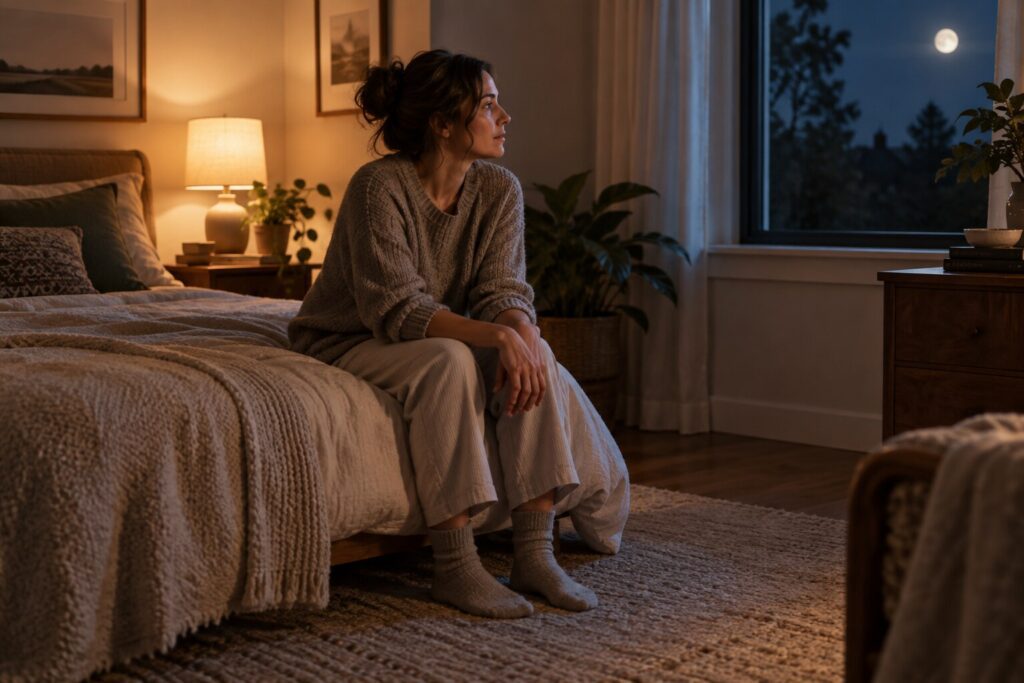
Anxiety at night has a special way of making everything feel bigger. During the day, a worry about money or a strange text from a friend is annoying. At 2am, in the dark, it turns into a full-blown disaster movie playing on repeat. If you’ve ever lain there doing the “if I fall asleep right now I’ll get five hours” maths, you know the feeling.
You’re definitely not the only one. Night-time is when a lot of people’s worries get loud. The good news is there are simple, practical things that can help your mind settle. Here’s why it happens, and nine ways to calm it down.
Table of Contents
Why Anxiety at Night Feels Worse
There are a few reasons. During the day you’re busy, and busyness is a pretty good distraction. At night there’s nothing between you and your thoughts. You’re also tired, and tiredness makes it harder to put worries in perspective.
Then there’s the sleep worry itself. Once you start stressing about not sleeping, your body releases more stress hormones, which makes sleep even harder. It’s a loop, and anxiety at night loves a loop.
1. Give Your Worries an Earlier Appointment
Try “worry time.” Pick 15 minutes in the early evening, sit down with a notebook, and write out everything on your mind. What’s bothering you, and one small next step for each thing if there is one. When worries show up at night, remind yourself they already had their slot and can wait until tomorrow’s.
It sounds too simple, but it works for a lot of people.
2. Do a Brain Dump Before Bed
If you didn’t get to worry time, keep paper by the bed. Write down whatever’s looping. Getting it out of your head and onto paper tells your brain it’s been captured and doesn’t need to keep reminding you.
3. Breathe Out Longer Than You Breathe In
Slow breathing is one of the quickest ways to switch your body out of fight-or-flight. Breathe in through your nose for a count of four, then out through your mouth for a count of six to eight. Keep going for a few minutes. Longer out-breaths help signal to your body that you’re safe.
4. Try the Cognitive Shuffle
This one’s great for racing thoughts. Pick a random word, like “garden.” For each letter, think of unrelated words. G: guitar, goat, glove. A: apple, anchor, airport. Picture each one. It keeps your mind busy with calm, random images, which is roughly what happens naturally as you drift off.
5. Get Up If You Can’t Sleep
If you’ve been lying awake for about 20 minutes, get up. Go to another room with dim light and do something quiet and boring, like reading a paper book or folding laundry. Come back when you feel sleepy. This stops your brain from linking your bed with lying awake stressed, and it’s a core part of CBT for insomnia.
6. Be Smart About Screens
Doomscrolling news at midnight isn’t doing anyone any favours. That said, not all screen time is the same. A calm, friendly chat with people you know can feel more soothing than lying alone with your thoughts. The key is to keep it light, dim your screen, and set a time to log off.
If you’re a night owl, our post on the best time to chat online covers when rooms tend to be busiest, so you’re not staying up late waiting for someone to show up.
7. Watch the Caffeine and Alcohol
Caffeine can stay in your system for hours, so an afternoon coffee might be part of your 1am wakefulness. Alcohol is sneaky too. It can make you drowsy at first but tends to disrupt sleep later in the night, which is prime time for anxiety to wake you up.
8. Build a Wind-Down Routine
Your brain likes cues. Doing the same few things in the same order each night, like a warm shower, dim lights, a cup of herbal tea, and ten minutes of reading, tells your body that sleep is coming. It doesn’t have to be fancy. It just has to be consistent.
9. Get Help if Anxiety at Night Won’t Let Up
If anxiety at night is happening most nights, or you’re regularly getting far less sleep than you need, please talk to a doctor. The CDC recommends adults get at least seven hours, and ongoing short sleep can affect your mood, health, and focus. CBT for insomnia (CBT-I) and treatment for anxiety can both make a big difference.
If your night-time thoughts ever turn to hurting yourself, please reach out straight away. In the U.S. and Canada, call or text 988. Elsewhere, Find a Helpline lists free services by country.
What to Do When You Wake Up With Anxiety at Night
Waking at 3am with your heart racing is one of the worst parts of anxiety at night. When it happens, try this simple sequence:
- Don’t check the time. Clock-watching almost always adds pressure.
- Take ten slow breaths with long out-breaths.
- Tell yourself, “This is just my nighttime brain. Things will look different in the morning.” It’s usually true.
- If a worry won’t let go, write it down with a note to look at it tomorrow.
- If you’re still wide awake after 20 minutes or so, get up and do something calm in low light until you feel sleepy.
The goal isn’t to force sleep. It’s to take the panic out of being awake, which makes sleep more likely to come back.
Build a Calmer Day for Calmer Nights
A lot of anxiety at night is actually daytime stress that never got a chance to settle. A few daytime habits can make your nights easier:
- Get morning light. It helps set your body clock so you feel sleepy at the right time.
- Move during the day. Exercise helps burn off stress, though very intense workouts late at night can keep some people wired.
- Take small breaks. Pausing for a few minutes during the day gives your mind a chance to process things, instead of saving it all for bedtime.
- Talk things through. Sharing a worry with a friend during the day often shrinks it before it gets a chance to grow at 2am.
Frequently Asked Questions
Why do I wake up at 3am with anxiety?
Many people wake briefly between sleep cycles. If you’re stressed, your mind can latch onto a worry in that moment and keep you awake. Getting up briefly and keeping things dim and boring often helps.
Is it bad to chat online when I can’t sleep?
Not necessarily. A short, calm chat can be comforting. Just keep your screen dim, avoid stressful topics, and give yourself a cut-off time.
What’s the fastest way to calm anxiety at night?
Slow breathing with a long out-breath is one of the quickest tools. Pair it with writing your worries down and you’ll often feel noticeably calmer within a few minutes.
Awake and want a calm, friendly room? See who’s around on Diamond Secrets.
This article is for general information and support, not medical advice. If you’re worried about your mental health, please talk to a doctor or licensed professional. If you’re in crisis, call or text 988 (U.S. and Canada), call Samaritans on 116 123 (UK and Ireland), or visit findahelpline.com to find free support near you.

PhoenixJenn (aka Symphony) is the founder of Diamond Secrets — the 18+ chat community she built from scratch because the internet needed a place that actually felt worth staying in. Part platform builder, part community guardian, part music obsessive, she handles everything from tech and design to cyber safety and community culture, which means no two days look the same.
She’s been building online communities for years and genuinely cares about getting it right — which is why Diamond Secrets keeps growing while other chat sites quietly fade away. Safety is baked in from the start here, not bolted on as an afterthought, and the warm atmosphere isn’t an accident either. That’s all her.
If Diamond Secrets feels like a hidden gem worth telling your friends about, that’s entirely on purpose.