
Safe Words: 7 Simple Systems Every Kink Player Should Know
Everything you need to know about safe words: why they matter, seven simple systems to choose from, nonverbal options, and how to respect them every time.

Every good scene has a way out. Safe words are the simplest, most reliable tool kink players have for keeping play consensual. They let anyone pause or stop instantly, without arguing, explaining, or breaking the trust that made the scene possible in the first place.
This guide explains why safe words matter, compares seven simple systems, covers nonverbal options, and shares the habits that make any system actually work.
Everything here is written for consenting adults 18 and older.
Questions about your own setup? Ask in our moderated BDSM chat room, where people swap tips every day.
Table of Contents
Why Safe Words Matter
A lot of kink involves saying things you do not literally mean. “Stop” and “no” may be part of a scene’s script. Safe words solve that problem by giving everyone a signal that is never part of the game. When it is used, play changes immediately.
They also do something quieter. Knowing that you can stop at any moment makes it easier to relax into a scene. Safe words do not limit play. They are what makes deeper play possible.
For the person in control, safe words are just as valuable. They remove guesswork. You do not have to read minds or interpret every sound. If something is wrong, you will be told clearly.
7 Safe Word Systems to Choose From
1. The traffic light system
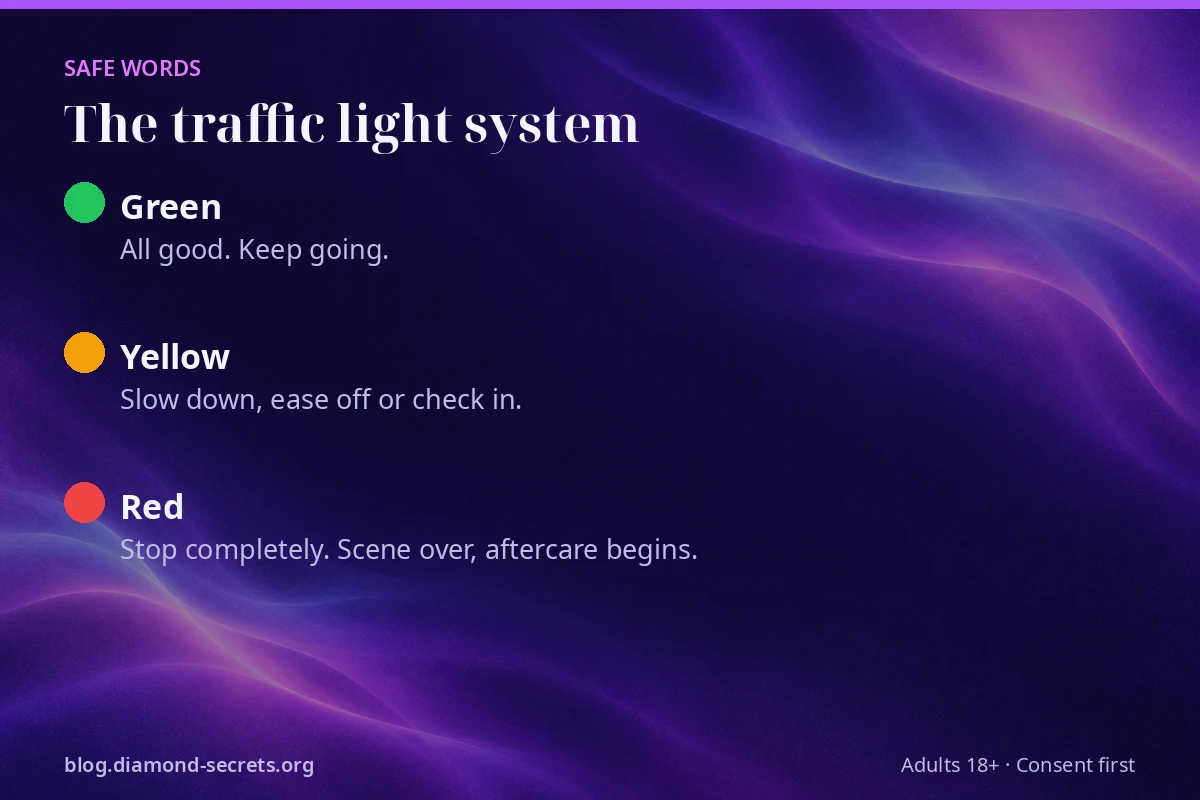
This is the most popular of all safe words systems, and for good reason. Green means all good, keep going. Yellow means slow down, ease off, or check in. Red means stop completely. It is easy to remember under pressure, and the person in control can ask “color?” at any time for a quick check-in.
2. A single unrelated word
Some people prefer one word that could never come up naturally, like “pineapple” or “Saturn.” It is simple and unmistakable. The downside is that it only says stop, with no way to ask for a gentle slow-down.
3. A two-word system
Pick two unrelated words: one for slow down and one for stop. This gives you the nuance of the traffic light system with words that feel more personal to you.
4. The dropped object signal
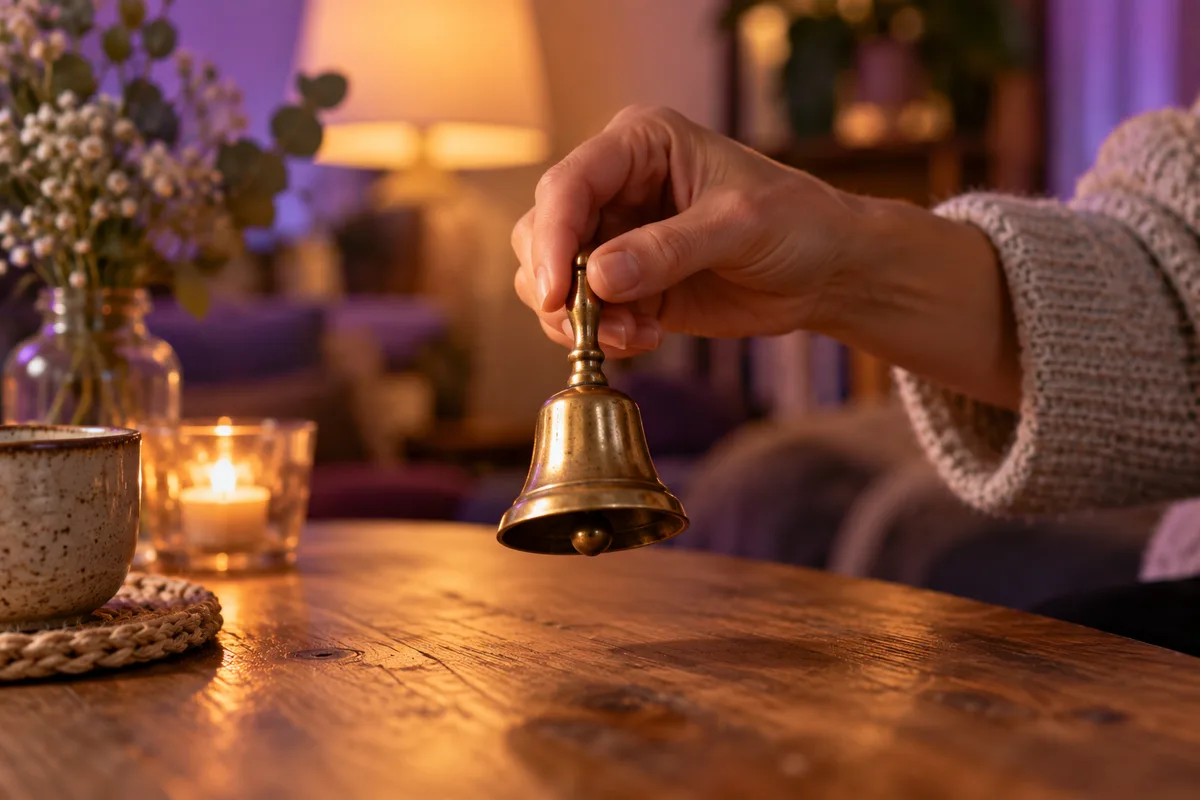
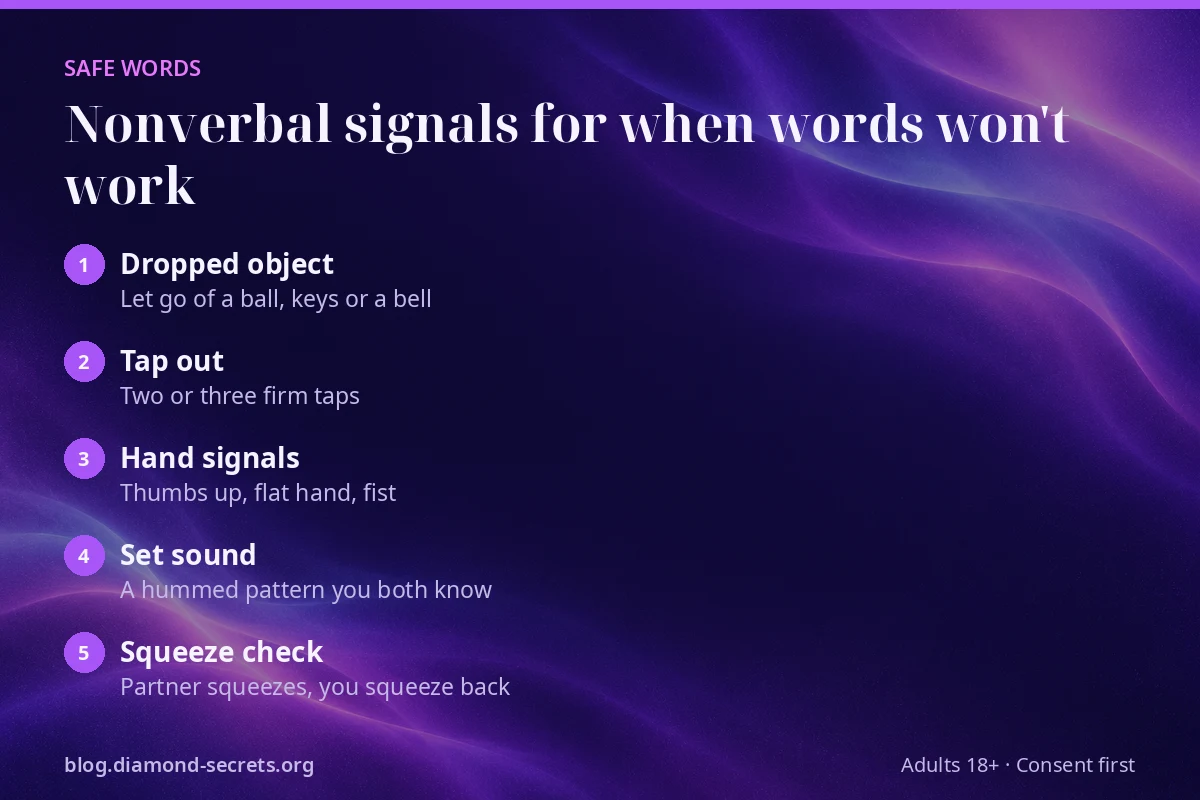
If someone is gagged or cannot speak, they hold a small object such as a ball, keys, or a bell. Dropping it means stop. This is one of the most trusted nonverbal safe words because it works even if the person cannot move much.
5. Tap-out signals
Borrowed from martial arts, tapping a partner or a surface two or three times means stop. Agree in advance how many taps and where.
6. Hand signals
A thumbs up, a flat hand, or a specific finger gesture can stand in for green, yellow, and red. These are useful in noisy spaces where words may not carry.
7. Humming or a set sound
For scenes where speech is limited, a specific hummed pattern, like three short hums, can work as a signal. Test it beforehand so you both recognize it.
Why Nonverbal Signals Deserve Extra Care
Spoken signals are easy. Nonverbal ones take more planning, because they depend on the person in control noticing them. A few habits make them reliable:
- Keep the signal visible or audible. If the dropped object is a soft ball on carpet, you may not hear it. A bell or keys works better.
- Pair it with regular check-ins. A squeeze check, where you squeeze a hand and wait for a squeeze back, confirms the person is still responsive.
- Treat silence as a reason to pause. If someone who has been responding suddenly goes quiet or still, stop and check. Do not assume it means they are enjoying themselves.
- Adjust for the position. If hands are restrained, a hand signal will not work. Choose something the person can actually do in that moment.
Safe Words for Different Kinds of Play
Different scenes put different demands on communication. Matching your signals to the kind of play keeps them practical.
Roleplay and power dynamics
When a scene involves a script where “no” or “stop” might be part of the story, a separate stop signal is essential. Make sure the roleplay itself never uses the color words, so there is no confusion.
Sensation and impact play
Here the yellow signal earns its keep. It lets someone say “that spot is too much” or “lighter please” without ending a scene they are otherwise loving.
Restraint
Anything that limits movement needs a signal that works with the restraint in place, plus safety shears within reach so the person can be released quickly if they call red.
Group or party settings
Many clubs and play parties use the traffic light system as a house standard, and dungeon monitors are trained to respond to it. Ask about house rules before you arrive.
How to Choose Safe Words That Work
The best safe words share a few qualities:
- Easy to say under stress. One or two syllables are best. Nobody wants to remember a tongue twister mid-scene.
- Impossible to confuse. Avoid anything that might appear in dirty talk or roleplay dialogue.
- Agreed in advance. Settle on them during negotiation, not in the moment. Our BDSM negotiation guide covers this.
- Backed by a nonverbal option. Always have a way to stop that does not depend on speech.
- Shared with everyone involved. In group or public play, the safe words should be known to all participants and any monitors.
Using Safe Words in Practice
Having safe words is one thing. Using them well is another. Here is what a healthy pattern looks like.
When someone says yellow
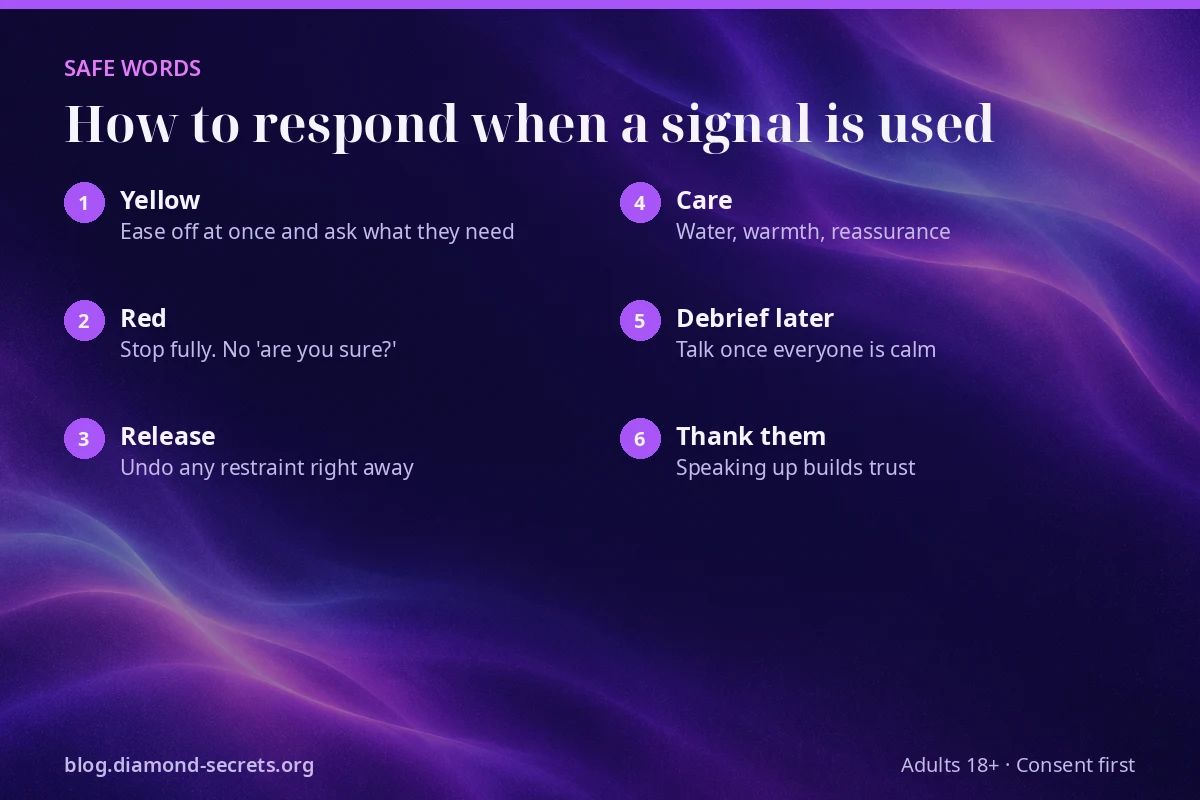
Ease off right away and check in. Ask what they need: less intensity, a pause, a position change, some water. Do not treat yellow as a failure. It is the system working exactly as intended.
When someone says red
Stop completely. Remove any restraints, check for physical and emotional well-being, and move into aftercare. Do not ask “are you sure?” and do not try to restart. The scene is over. Our BDSM aftercare guide explains what comes next.
Check-ins even when nobody calls a color
Good players do not wait for a signal. They watch breathing, body language, and responses, and they ask “color?” regularly. A signal system is a backstop, not a substitute for paying attention.
Safe Words in Online and Text Play
Safe words matter in text roleplay too. Online scenes can stir up strong emotions, and a single word can stop a story that has drifted somewhere uncomfortable.
- Agree on safe words before the scene starts, just like in person.
- Many players use the out-of-character marker “OOC” or double parentheses for a check-in, and “red” to end the scene.
- If you are ever unsure whether someone has stopped responding because of the story or because something is wrong, step out of character and ask.
Our BDSM chat etiquette guide and guide to consent in online roleplay go deeper on text-based scenes. If you want to practice, our BDSM room is moderated and full of regulars who take signals seriously.
What If a Safe Word Is Ignored?
This needs to be said plainly: ignoring safe words is a consent violation. It is not a mistake of enthusiasm and it is not part of the game.
If it happens to you, you have every right to end the scene and the relationship. Talk to people you trust. If you were harmed, organizations like RAINN offer confidential support. In online spaces, block the person and report them. Here is how to report a user on Diamond Secrets.
Anyone who mocks safe words, refuses to use them, or claims “real” submissives do not need them is showing you a serious warning sign. Read our full list of BDSM red flags.
Common Myths About Safe Words
“Using a safe word means I failed.”
No. Using safe words is a skill, not a weakness. Experienced players use them regularly. It means you know yourself well enough to speak up.
“Experienced people do not need them.”
Experience makes people better at reading each other, but bodies and moods change. Even long-term partners keep safe words in place.
“If I say it, my partner will be disappointed.”
A good partner will be grateful. A partner who sulks or punishes you for using safe words is not someone to play with.
“Safe words are only for the submissive.”
Anyone in a scene can use them, including the dominant or top. If the person in control feels overwhelmed, uncomfortable, or unsure, they should stop too.
Practice Before You Need Them
It sounds silly, but it helps to say your safe words out loud a few times before a scene. Practice the nonverbal signal as well. Run a short, low-stakes scene where calling yellow is part of the plan, so you both experience how it feels to slow down and pick back up.
Newer players often freeze when overwhelmed. Rehearsing in a calm moment builds the reflex you will want when it counts.
Teaching Safe Words to a New Partner
If you are the more experienced partner, take the lead on explaining your system. Do not assume a newer partner will speak up on their own. Many beginners worry that calling yellow will ruin the mood or disappoint you.
- Explain the why. Tell them signals make the scene better for both of you, because you can relax knowing they will tell you if something is wrong.
- Give explicit permission. Say out loud: “I want you to use these. I will never be upset with you for using them.”
- Model it. If you need to pause as the top, use the same signal. It shows the system belongs to both of you.
- Praise its use. When a partner calls yellow, thank them afterward. That builds the habit.
When both people trust the system, scenes become more relaxed, more playful, and more honest.
Frequently Asked Questions
Can we change our safe words?
Yes, any time. Just agree on the change before play starts, not in the middle of a scene.
Should safe words be the same with every partner?
Many people stick with the traffic light system everywhere because it is widely understood. That consistency can be a real safety advantage.
What if I forget my safe words mid-scene?
Then plain language works. “Stop, I mean it” or any clear distress should be treated as a stop. Safe words are a tool, not a loophole.
The Bottom Line on Safe Words
Safe words are simple, but they carry a lot of weight. Pick a system, add a nonverbal backup, agree on it in advance, and honor it every single time. That foundation is what lets everyone relax, trust, and enjoy themselves.
New to all of this? Start with our BDSM for beginners guide, then come say hello in our BDSM chat room.

PhoenixJenn (aka Symphony) is the founder of Diamond Secrets — the 18+ chat community she built from scratch because the internet needed a place that actually felt worth staying in. Part platform builder, part community guardian, part music obsessive, she handles everything from tech and design to cyber safety and community culture, which means no two days look the same.
She’s been building online communities for years and genuinely cares about getting it right — which is why Diamond Secrets keeps growing while other chat sites quietly fade away. Safety is baked in from the start here, not bolted on as an afterthought, and the warm atmosphere isn’t an accident either. That’s all her.
If Diamond Secrets feels like a hidden gem worth telling your friends about, that’s entirely on purpose.