
Sub Drop: 8 Warning Signs and Simple Ways to Recover
What sub drop is, why it happens, eight warning signs, simple ways to recover, and how partners can soften drop with good aftercare.

A great scene can leave you floating. Then, a few hours or a couple of days later, the floor drops out. You feel flat, teary, tired, or strangely ashamed, and you cannot quite explain why. That experience has a name: sub drop.
Sub drop is common, normal, and manageable. It is not a sign that you did something wrong or that kink is bad for you. This guide explains why it happens, the eight warning signs, simple ways to recover, and how partners can help. It also covers dom drop, which is just as real.
Everything here is written for consenting adults 18 and older.
Feeling low after a scene and want someone to talk to? Our Safe Haven room is a calm, judgment-free space.
Table of Contents
What Is Sub Drop?
Sub drop is the emotional and physical low some people feel after an intense BDSM scene. It most often affects the submissive or bottom, which is where the name comes from, but anyone can experience it.
During a scene, the body releases adrenaline, endorphins, and other chemicals. Many submissives describe a floaty, euphoric state called subspace. When the scene ends and those chemicals fade, the body and mind have to recalibrate. For some people that transition is smooth. For others it feels like a crash.
Emotional factors play a part too. Scenes can be vulnerable. You may have explored a fantasy you feel conflicted about, played with intense power dynamics, or simply let your guard down in a big way. Processing that can take time.

8 Warning Signs of Sub Drop
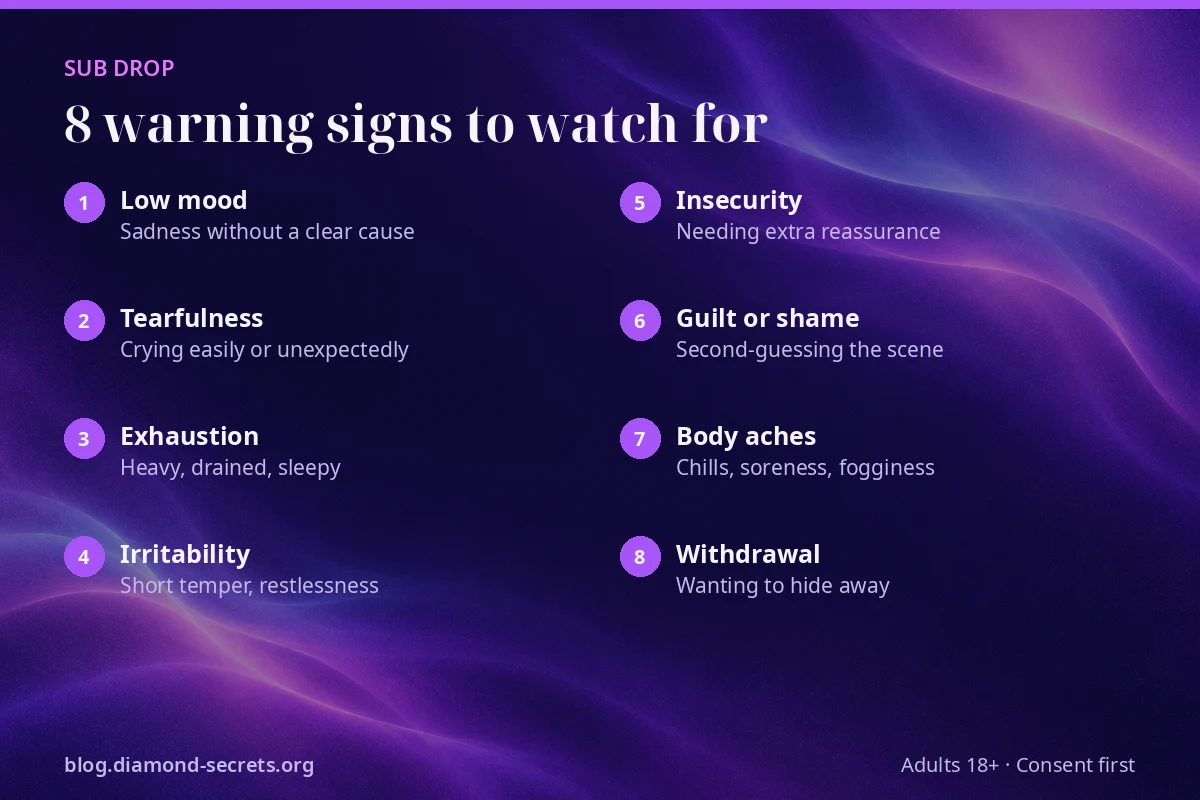
Drop looks different for everyone, but these signs come up again and again:
1. Low mood
Feeling sad, empty, or flat, often without a clear reason.
2. Tearfulness
Crying easily, sometimes over small things.
3. Exhaustion
A heavy, drained tiredness that sleep does not fully fix.
4. Irritability
Feeling short-tempered, restless, or on edge.
5. Insecurity
Needing more reassurance than usual, or worrying that your partner thinks less of you.
6. Guilt or shame
Second-guessing the scene, or feeling embarrassed about what you enjoyed.
7. Physical symptoms
Chills, body aches, brain fog, or a strange sense of being disconnected from your body.
8. Withdrawal
Wanting to hide away, cancel plans, or avoid messages.
When Does Sub Drop Happen?
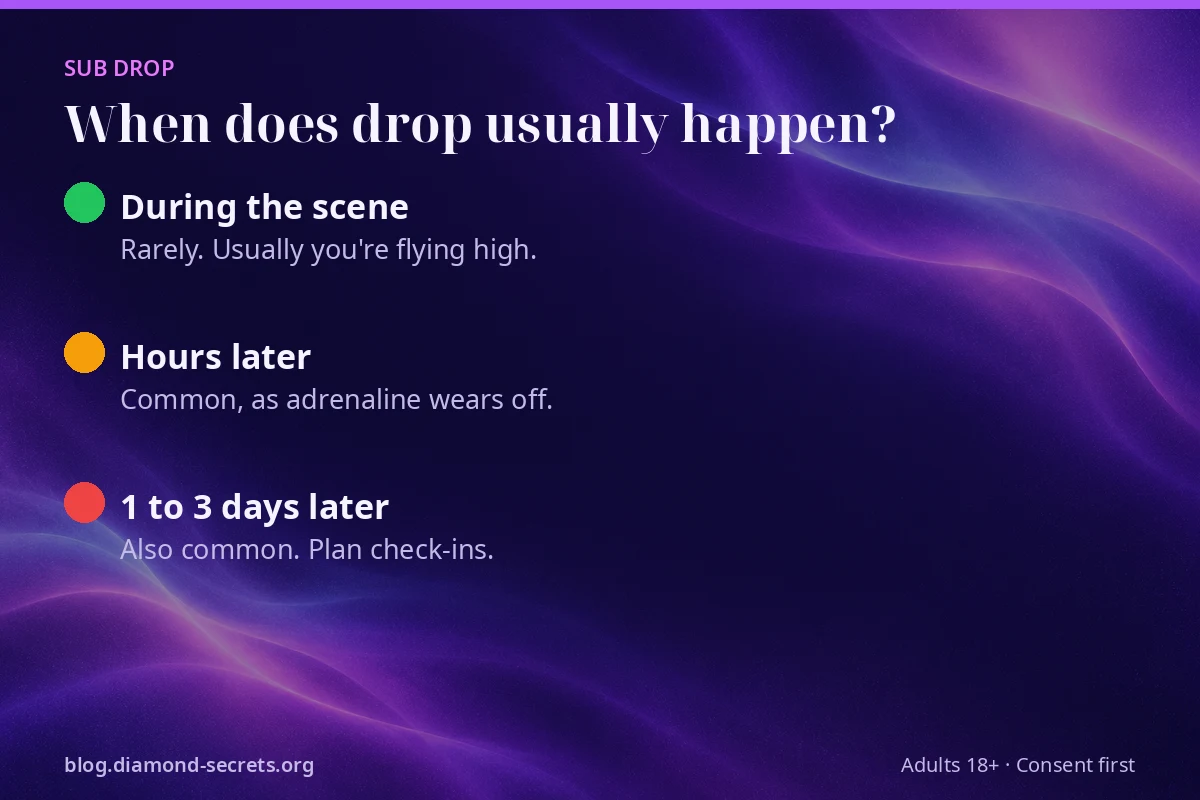
Timing varies. Some people drop within an hour of a scene, as soon as the adrenaline wears off. Others feel fine that night and hit sub drop one to three days later. That delay catches many people off guard, which is why next-day check-ins matter so much.
The intensity of the scene does not always predict the intensity of the drop. A light scene during a stressful week can lead to a bigger dip than an intense scene on a calm weekend.
Simple Ways to Recover From Sub Drop
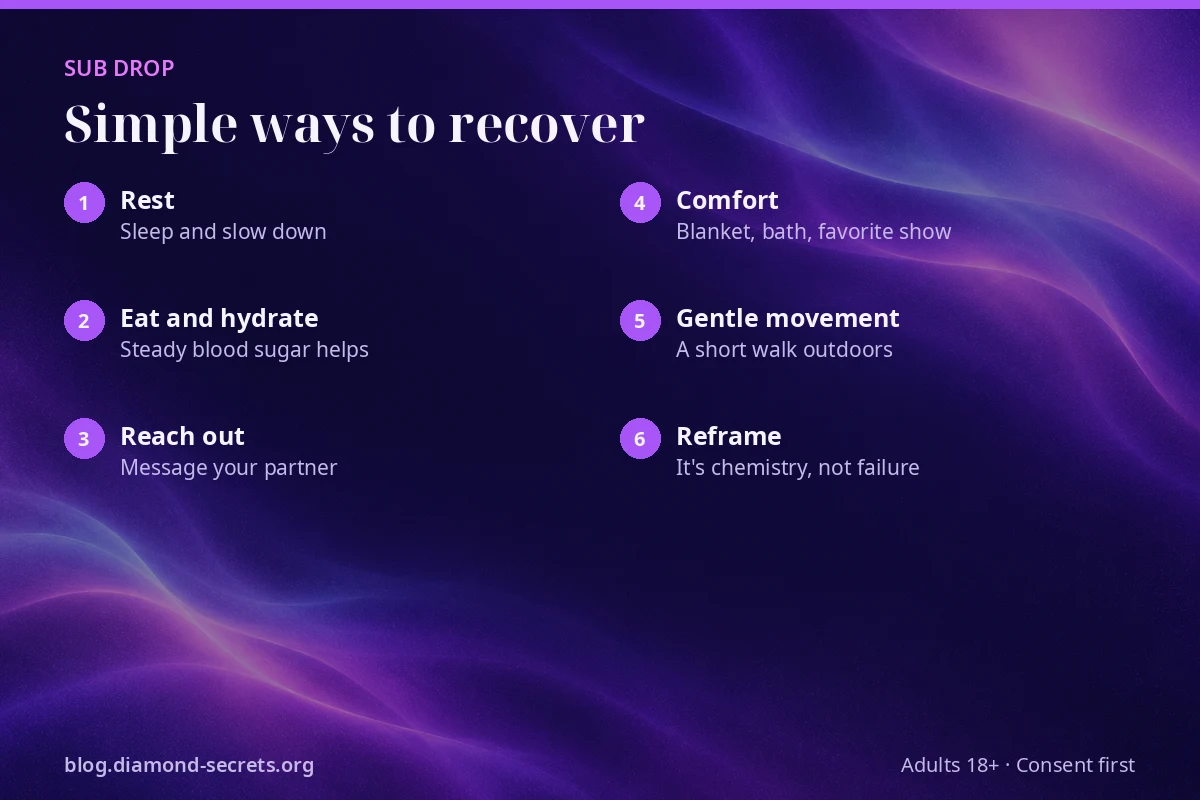
It usually passes on its own within a few days. These simple steps can make it gentler and shorter:
- Rest. Give yourself permission to sleep, slow down, and skip anything optional.
- Eat and hydrate. Low blood sugar and dehydration make everything feel worse. A proper meal helps more than you would expect.
- Reach out to your partner. A quick message like “I’m dropping a bit today” lets them support you.
- Use comfort items. A favorite blanket, a warm bath, a familiar show, or a stuffed animal can be grounding.
- Move gently. A short walk outside, some stretching, or fresh air can lift your mood.
- Reframe it. Remind yourself that sub drop is chemistry and processing, not proof that something is wrong with you.
- Journal. Writing about the scene, what you loved and what felt complicated, helps your mind sort it out.
- Talk to community. Many people find comfort in hearing that others go through it too.
How Partners Can Help
Good aftercare will not always prevent sub drop, but it softens it. If you are the dominant or top, you can help by:
- Planning aftercare in advance. Ask what your partner needs before you play. Our BDSM aftercare guide has ideas.
- Checking in the next day and the day after. A simple “how are you feeling?” goes a long way.
- Offering reassurance. Remind them that you enjoyed the scene and think no less of them.
- Not taking it personally. Sub drop does not mean you did something wrong.
- Being available. If you can, make time for a call, a visit, or a long chat.
Dom Drop Is Real Too
Dominants and tops can experience their own version of drop. After running an intense scene, they may feel guilty, anxious, or empty. Some worry they went too far or question whether it is okay to enjoy the role. Dom drop is less talked about, which can make it feel isolating.
If you lead scenes, plan aftercare for yourself as well. Tell your partner what you need, whether that is reassurance, quiet time, or a chance to talk it through. Good aftercare goes both ways.
Preventing Sub Drop
You cannot always prevent it, but you can make it less likely:
- Negotiate clearly. Scenes that stay within agreed limits are less likely to leave confusing feelings. See our BDSM negotiation guide.
- Avoid playing when already depleted. If you are exhausted, stressed, or grieving, keep scenes lighter.
- Keep snacks and water handy. Physical care makes a difference.
- Schedule a soft day afterward. If you know you tend to drop, plan a quiet day after intense play.
- Build a drop plan. Write down what helps you, and share it with your partner.
Sub Drop After Online Play
Online scenes can trigger sub drop too, especially intense text roleplay or long-running D/s dynamics in chat. Because you are alone when the screen goes dark, the drop can feel lonelier.
Agree with your chat partner to stay online for a few minutes after a scene, step out of character clearly, and check in the next day. If you feel low and your partner is not around, spending time in a calm space like our Safe Haven room or chatting with friendly regulars in the BDSM room can help. Our BDSM chat etiquette guide covers wrapping up online scenes.
When Sub Drop Needs More Support
Most drops pass within a few days. Seek more support if:
- Low feelings last longer than a week.
- The drop brings up past trauma or distressing memories.
- You feel hopeless or have thoughts of harming yourself.
- You are not sure whether what happened in the scene was consensual.
A kink-aware therapist can help you process what is going on. The National Coalition for Sexual Freedom has resources for finding one. If you are in crisis in the US, call or text 988 to reach the 988 Suicide and Crisis Lifeline any time. Our earlier post on checking in with your head space may help too.
Building a Personal Sub Drop Plan
If you know you tend to drop, a written plan can make a big difference. Write it when you feel good, so it is ready when you do not. Include:
- Your early warning signs. For example, “I stop answering messages” or “I feel weepy after lunch.”
- What helps. Specific comfort foods, shows, music, or activities.
- Who to contact. Your partner, a friend who knows about your kink life, or a supportive chat community.
- What to tell yourself. A reminder like “This is chemistry. It will pass. I did nothing wrong.”
- When to get help. Clear signs that it is time to talk to a professional.
Share the plan with your partner so they know how to support you. Many couples review it together after their first few scenes.
Myths About Sub Drop
- “Sub drop means the scene was bad.” Not at all. Wonderful scenes often cause the biggest drops, because the high was so high.
- “Only beginners get it.” Experienced players drop too. They simply learn to recognize and manage it.
- “Good aftercare prevents it completely.” Aftercare softens it, but some drop is a normal physical response.
- “You should hide it from your partner.” Sharing how you feel helps both of you, and it helps your partner plan better aftercare next time.
Supporting a Partner Through Sub Drop
If your partner tells you they are dropping, the most helpful response is calm and practical. Ask what they need right now. Offer to call, visit, or bring food. Remind them you enjoyed the scene and care about them. Avoid trying to analyze the scene in detail while they feel low; that conversation can wait until they feel steadier. Sub drop passes faster when someone feels supported rather than alone.
Frequently Asked Questions
Is sub drop a sign I should stop doing BDSM?
Not by itself. Sub drop is a common, temporary reaction. If it is frequent or severe, though, it is worth adjusting the intensity of scenes, improving aftercare, or talking to a professional.
How long does sub drop last?
Usually a few hours to a few days. If it lasts more than a week, reach out for support.
Can I have sub drop if I am not submissive?
Yes. Tops, dominants, and switches can all experience drop after intense play.
Be Gentle With Yourself
Sub drop is your body and mind coming back down after something big. Rest, eat, reach out, and remind yourself that it will pass. With good aftercare and a little planning, most people find their drops become smaller and easier over time.
New to kink? Our BDSM for beginners guide covers the basics. And if you just need some company, the BDSM chat room is full of people who understand.

PhoenixJenn (aka Symphony) is the founder of Diamond Secrets — the 18+ chat community she built from scratch because the internet needed a place that actually felt worth staying in. Part platform builder, part community guardian, part music obsessive, she handles everything from tech and design to cyber safety and community culture, which means no two days look the same.
She’s been building online communities for years and genuinely cares about getting it right — which is why Diamond Secrets keeps growing while other chat sites quietly fade away. Safety is baked in from the start here, not bolted on as an afterthought, and the warm atmosphere isn’t an accident either. That’s all her.
If Diamond Secrets feels like a hidden gem worth telling your friends about, that’s entirely on purpose.